Showing posts with label diving aruba tourism. Show all posts

Saturday, February 27, 2016

LA Film and TV Designers, Dive Site Developers, Marine Biologists Building Artificial Reefs

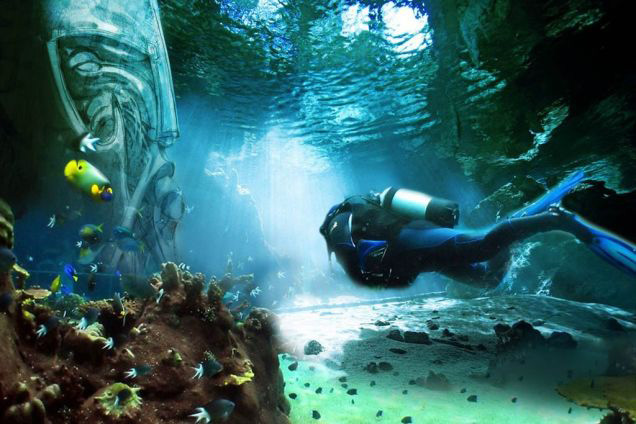
Reef Worlds Underwater ReefLos Angeles-based Reef Worlds, whose team includes film and television designers, dive-site developers, and marine biologists, are designing next generation sustainable reefs for tourism and the environment in a race to save inshore ocean habitat around the globe.
Environmental change has caused the loss of more than half the world’s reef building corals. Coral cover, a measure of the percentage of the seafloor covered by living coral, is now just 10-20 percent worldwide. The Caribbean, thought to be one of the more pristine global reef systems, has lost 80% of its coral cover in only the last 50 years.
CEO Patric Douglas notes that while scuba diving and snorkeling are a $3-billion-a-year business, most resort developments don’t offer much in the way of special underwater experiences. “Many five-star resorts have one-star waterfronts,” says Douglas. Reef Worlds estimates there are 500,000 square miles of resort oceanfront with limited appeal to adventurous tourists due to rampant habitat loss.
Worse yet, these zones have suffered decades of neglect as resort developers focused on land based amenities such as water parks and golf courses.
“Reef Worlds was established three years ago with the goal of working alongside resorts to create sustainable artificial reef systems that help reduce tourism pressures on natural reefs. Reef Worlds are fully monetized discrete mini-marine “protected areas” within the resort’s own footprint, allowing them to brand the signature underwater experiences of their guests while creating and fostering regional habitat,” says Douglas.
Reef Worlds have been promoting the economic and ecological benefits of what he calls “habitat tourism,” which would give resort owners a way to monetize the waters off their beaches, while relieving some of the pressure from aquatic tourists on natural underwater reef systems that are endangered or dying.
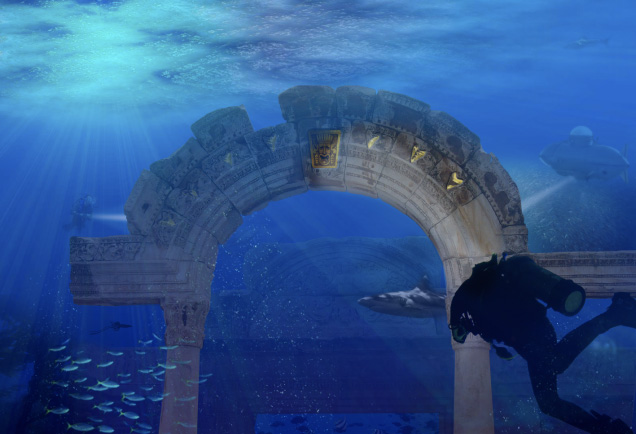
Reef-Worlds-Underwater-Arch
Artificial reefs have been around for decades. Most were created with everything from sunken battleships to old tires—and most, says Douglas, are boring. “Who wants to look at a concrete triangle?” he asks. Reef Worlds designs and creates “dynamic reefs” to attract sea life and tourism interest, making them places people actually want to explore, he says.
In Mexico, the company is developing an underwater art garden featuring 200 works of art that will take their cues from Mayan and Aztec iconography. Douglas calls this “Mayan Gods in 3D.”
Douglas says Reef Worlds will be able to bring in projects at 10-20% of the cost of a typical resort water theme park, which can run $70 million to build and $10 million a year to market and maintain. And unlike land based entertainment facilities Reef Worlds sites slowly transform over time into habitat for a wide range of wildlife and corals like a typical artificial reef.
Reef Worlds’ “Pearl of Dubai” project will be located in the waters around the World Islands development. Renderings suggest the park might be modeled after the mythic Lost City of Atlantis. Reef Worlds has five projects in varying stages of development in Dubai, Qatar, the Philippines, and Mexico.

Wednesday, December 17, 2014

The Navy’s New Robot Looks and Swims Just Like a Shark


The American military does a lot of work in the field of biomimicry, stealing designs from nature for use in new technology. After all, if you’re going to design a robot, where better to draw inspiration than from billions of years of evolution?

The latest result of these efforts is the GhostSwimmer: The Navy’s underwater drone designed to look and swim like a real fish, and a liability to spook the bejeezus out of any beach goer who’s familiar with Jaws.

The new gizmo, at five feet long and nearly 100 pounds, is about the size of an albacore tuna but looks more like a shark, at least from a distance. It’s part of an experiment to explore the possibilities of using biomimetic, unmanned, underwater vehicles, and the Navy announced it wrapped up testing of the design last week.

The robot uses its tail for propulsion and control, like a real fish. It can operate in water as shallow as 10 inches or dive down to 300 feet. It can be controlled remotely via a 500-foot tether, or swim independently, periodically returning to the surface to communicate. Complete with dorsal and pectoral fins, the robofish is stealthy too: It looks like a fish and moves like a fish, and, like other underwater vehicles, is difficult to spot even if you know to look for it.

Complete story from Gizmondo. 

Monday, November 17, 2014

The Blue Solution to America’s Aging Infrastructure?

The world’s oceans are littered with abandoned man-made objects and structures that are considered “repurposed” materials and dubbed artificial reefs. Old tires, toilets, navy ships, oil platforms, retired subway cars, and airplanes, have all either intentionally or unintentionally, been converted into artificial reefs due to the indomitable nature of marine life. Which of these reefs is not like the other?

Oil platforms, because unlike the pile of old tires or deserted toilets, platforms span the entirety of the water column, from seafloor to ocean surface, and for years, as the oil companies have been drilling, pumping, and producing, ecosystems have quietly been colonizing, thriving and taking over the legs, crossbeams and joints of these massive structures.

This is what makes the Rigs to Reefs program different, no construction required- plus 50-60 years of living proof of its effectiveness functioning as an established artificial reef, making the title “Rigs to Reefs” a bit of a misnomer.

At a first glance, artificial reefs seem to be a relatively new phenomenon, but in fact, they’ve been a part of coastal marine life for hundreds of years. Whether created to protect strategic areas from hostile weather, guard against attacking enemy forces or to improve fish stocks, man has thrown all kinds of objects imaginable into the water. Some of the earliest man-made reefs were created in Japan in the 1600s to improve fish stocks.

In India, villagers create triangular concrete structures utilizing the sand from their beaches and then sink them in order to address the damage done by commercial trawling in the area. In the US, the first documented artificial reef in the United States was off South Carolina in the 1830s and was constructed using log huts. More recently, the sinking of naval vessels for artificial reefs, as part of the ‘Ships-to-Reefs’ program, has become relatively common practice and serves several purposes. It creates new ocean habitat and a tourist destination, while also relieving the Navy of outdated ships. From the 1830’s to the present, over 80% of artificial reefs in United States waters have been created using secondary use materials.

Full article here.

Friday, October 24, 2014

Naples awards contract for artificial reef project

Scuba divers rejoice. Collier County is set to build a number of artificial reefs during the next year.
The Naples City Council voted Wednesday to award a $313,650 contract to McCulley Marine Servicesto build nine 500-ton reefs in two locations off the Collier coast. This year Marco Island and the county approved similar projects totaling $1.3 million.

"I'm very excited about this. It's a good recycling project," said Councilman Sam Saad, who made the motion to approve the project.

The reefs will occupy six sites ranging between 12 and 27 miles offshore and will be primarily built of 500-ton concrete units spaced along the sea floor.

The projects will be funded almost entirely by grants from BP Exploration and Production in response to the 2010 Deepwater Horizon oil spill. In addition to Naples' grant, Collier and Marco each received $500,000. The grants were awarded in 2012 and 2013, but the plans weren't finalized until this summer, said Chris D'Arco, senior environmental specialist with Collier's Coastal Zone Management Department.

The project is in the final phases of permitting with the U.S. Army Corps of Engineers, and work is expected to begin in late this month or early November and wrap up by March 2015.

Full story here. 

Tuesday, March 5, 2013

ARTIFICIAL REEFS FOR RESORTS: WHAT’S IN YOUR WATERFRONT?

Typical dynamic reef location for tourism and environment

Artificial Reefs are also known as Dynamic Reefs when applied to resort and development waterfronts.

At Reef Worlds we have been leading the Dynamic Reef Revolution.

Reef Worlds design teams spent 2012 reviewing the state of five-star resort waterfronts in the Caribbean and Pacific. Their report shed a new light on the underwater world beyond the high tide mark.

(TRAVPR.COM) USA - March 5th, 2013 - With well known resort brands spending millions of dollars on land-based renovations and new construction, few have yet to discover their own waterfronts -- underwater -- as a source of revenue and completely unique client engagement.

“It’s all about creating an emotional engagement,” says Dave Taylor Director of Development at Reef Worlds, an L.A based underwater design and development company.

“There’s an estimated 500,000 square miles of accessible ocean front sitting right off mainstream hotel chains and fractional ownership resorts across the Caribbean and Asia that no one has created any meaningful engagement with. The resorts who own these spaces still consider the high tide mark their responsibility. The end result are waterfront spaces that no one wants to snorkel on, or dive on, worse yet spaces that wildlife, (the reason people engage with the water), are leaving because of environmental neglect. Reef Worlds creates the kind of habitat that can bring these spaces back to life with artificial reef elements that are designed for both tourism and the environment."

Taylors design team create unique and iconic underwater worlds on resort waterfronts in the 'goldilocks zone' for tourism and wildlife. “Today’s clients want to create their own vacation content and share it via social media with the world. it’s imperative that these unique emotional ‘engagement points’ be worthy of that content creation. The images and videos they share that are ultimately branded to the resort turning your clients into marketing machines for your brand.”

Dave Taylors design and build team are avid water users and have traveled extensively around the world to discover the state of resort waterfronts in 2012 and their report was not pretty. “We found old tires, garbage, sand bottoms, broken coral, and wildlife that was barely hanging on. In short not a place you would want to grab a snorkel kit and go explore and these were 5 star developments and fractional ownership properties.”

Reef Worlds engagement solutions for resorts are simple. Take the concept of an artificial reef, typically rock tailings, rip rap, and or concrete shapes that have no tourism value and fundamentally redesign the concept to create entire worlds underwater for tourism and wildlife. Reef Worlds harness 5,000 years of human design elements with a touch of Hollywood magic to deliver underwater experiential sites that capture and hold mass tourism within a resort developments own footprint.
They are also designed as revenue generators from the day they are placed onsite.
 
Tourism Revenue 101

“Snorkel rentals have some compelling numbers behind them. A typical snorkel set rents for $20-30USD a day, and at just 100 sets a day you’re looking at close to a million dollars in revenue generation for the resort, plus habitat creation with the increase of bio mass and colorful fish to your waterfront. But the Holy Grail of Reef Worlds are the newly branded vacation memories for your clients and their entire family in a way that is practically maintenance-free. Try getting all that from a land-based water park.”

If You Build It

Habitat creation is important for regional wildlife. Many resorts worldwide are suffering from extensive habitat loss underwater. Reef Worlds builds the kind of large structures that attract soft coral growth, herbivorous fish, and schooling fish species. Reef Worlds design teams also employ marine biologists and fish ecologists to design underwater worlds that also act as instant habitat creation.

“The next decade will be all about who has the ability to create an emotional connection with their client base. After all, one beach is the same as the next beach and you can only add so many swimming pools and land-based attractions before you start running out of space. Our message is simple, start building underwater and discover how easy it is: re-engage your clients and get them to use social media to spread the word about your resorts while helping the regional environment at the same time."

About Reef Worlds

At the intersection of art, science, and the environment is Reef Worlds. When a unique team of film and television designers, dive site developers, and marine biologists got together they dreamt of a better way to experience the undersea realm - the result was Reef Worlds.

Wednesday, February 27, 2013

In tourism-dependent Caribbean, efforts to restore mostly dead coral reefs increasing

Mats of algae and seaweed have shrouded the once thick coral in shallow reefs off Jamaica's north coast. Warm ocean waters have bleached out the coral, and in a cascade of ecological decline, the sea urchins and plant-eating reef fish have mostly vanished, replaced by snails and worms that bore through coral skeletons.

Now, off the shores of Jamaica, as well as in Caribbean islands from Bonaire to St. Croix, conservationists are planting fast-growing coral species to try and turn things around by "seeding" reefs.

The strategy has doubters, with one expert joking that prayer might be as effective, but conservationists say the problem is so catastrophic that inaction is not an option. According to the International Union for Conservation of Nature, live coral coverage on Caribbean reefs is down to an average of just 8 percent, from 50 percent in the 1970s.

Article here.

Tuesday, February 26, 2013

Resort developers should pay attention to these two words - Coral Bleaching


It's happening, and it's worldwide. The next 10 years will see a continued near shore degradation of reefs that once supported a wide variety of marine life...and tourism dollars.

Resorts and new developers can either start building now for this inevitable tide of bad news with the addition of marine friendly artificial reefs or be caught short later when water based tourists leave to explore sites that still contain viable wildlife:

Three-quarters of the world's reefs are at risk according to a report.

By 2050 virtually all of the world's coral reefs – from the waters of the Indian Ocean to the Caribbean to Australia – will be in danger, the report warns. The consequences – especially for countries such as the Philippines or Haiti which depend on the reefs will be severe.

"These are dire results," said Lauretta Burke, a lead author of Reefs at Risk, a collaborative effort led by the World Resources Institute in Washington and 25 other research organisations.

The reefs of south-east Asia are in the most acute peril – with 95% on the danger list; 75% of the reefs in the Caribbean are also threatened, including all those in Florida, Haiti and Jamaica. But even Australia, where reefs are protected, will be in the danger zone by the middle of the century if climate change is left unchecked.

Jane Lubchenco, who heads the National Oceanic and Atmospheric Administration, described the scenario as a "perfect storm" of global and local threats. "Make no mistake. This is a critical time for ocean eco-systems in general but especially for coral reefs," she said.

Burke and other experts at the release of the report in Washington said the assault could be reversible. "Coral reefs are resilient and do rebound from these pressures when local threats are kept low," Burke said.

But Lubchenco warned: "It will take a Herculean effort to reverse the current trajectory and leave a healthy ecosystem to our children and grandchildren."

Article here.

Hotels take fitness amenities to the great outdoors


A recent article came across our desk here at Reef Worlds this morning. Naturally we like this trend and see it being used for new Reef Worlds sites in development with our partner resorts. Fact is people like to explore and exercise at the same time, it's the kind of activity that helps brand resorts:

(Reuters) - From sightseeing city runs and nature hikes down country trails to surfing sessions, hotels are luring leisure and business clients outside their climate-controlled rooms for outdoor activities to keep fit while traveling for business or pleasure.

Morning runs, afternoon power walks and bicycle rides are fast becoming standard fare for hotels in urban centers, with the cityscape dictating the route.

"Since most of our hotels are urban, we like our guests to get outside in the neighborhood," said Mike DeFrino, executive vice president of hotel operations at Kimpton Hotels & Restaurants.
In cities with a strong running population, he said, managers or assistant managers at the chain of boutique hotels will lead the morning run.

Many U.S. hotels also offer bicycle borrowing, particularly in cities such as San Diego, California, and Washington, D.C., and New York City.

Studies have shown that exercising outdoors can offer advantages over indoor, gym-based fitness routines. British researchers found that natural environments may increase activity levels with less perceived exertion, reduce stress and improve mood.

The Fairmont Sonoma Mission Inn & Spa, in California wine country, offers bike tours to local wineries, walking tours to local purveyors and a hike to a 2,000-year-old Redwood Tree, as well as treks of varying levels of difficulty and water yoga classes in thermal mineral pools.
"The hikes sell out almost every morning," said Michelle Heston of Fairmont Hotels & Resorts, which has 60 hotels around the globe.

Business travelers, who make up about half of Fairmont's clientele, work out to a schedule different from the tourist.

"The business traveler has different habits. Early 6 a.m. offerings are popular with them, those on holiday are much later," she said.

Jodi Sullivan, senior director, global fitness, at Hilton Worldwide, said both business and leisure travelers are increasingly aware of the importance of maintaining a healthy lifestyle.
"We always want to take advantage of the great outdoors, said Sullivan, adding fitness activity at Hilton, depending on location, may include bike rentals and beach volleyball courts.

Sullivan, a personal trainer, said Hilton created its fitness program in 2006. For its bicycle program city route maps are printed on the backs of water bottles.

For people who prefer not to leave their hotel rooms at some Hilton hotels they can book a Yoga Room, with a king-size bed and a designated area to practice headstands and postures, or a Cardio Room, which comes with a cardio machine that simulates the workout of an elliptical, a treadmill and a bike.

Hotels routinely offer in-room, on-demand yoga and Pilates programming, and most have indoor fitness centers. Kimpton hotels also lend out hula hoops, resistance bands, hand weights and jump ropes.

"The business traveler is on a tighter schedule. They're less apt to use the planned activities and more apt to use the fitness center at 5:00 a.m.," DeFrino explained. "We encourage people who don't want to leave their room to order a yoga bag, and watch a one-hour yoga DVD on TV."

He added that the outdoor fitness activities are specific to the site. In La Jolla, California hotel clients can borrow a golf cart or surfboard and wetsuit.

(Editing by Patricia Reaney and Leslie Gevirtz)

Monday, February 25, 2013

Reef Worlds in Aruba in talks with resorts and Government officials about building underwater worlds

ARUBA – Reef Worlds help waterfront properties worldwide enhance their near shore waters, the ones closest to beach fronts with interactive man made designs elements placed underwater. The idea is to create entire worlds underwater that inspire and are iconic. Reef Worlds are carefully placed in areas where resorts and developments have sand or grass bed bottoms that currently hold little interest to guests.

Reef Worlds can also be placed in areas where resorts and island residences experience denuded reef environments or in areas that you would like to highlight underwater tourism. Our underwater sites are 100% neutral and do not harm the environment, rather they provide instant habitat for a wide variety of fish and coral life to begin near shore propagation. They can also be used as discreet set aside or mini marine protected areas capturing high volume tourism traffic while protecting natural reefs nearby.


We want divers and snorkelers to come away with a feeling of wonderment and awe, the same feeling Dr.Howard Carter had when he first unearthed King Tuts tomb in 1922. This is underwater discovery on a grand scale, we call it instant tourism.

Reef Worlds design process enables our clients to help develop the feel and back story to their Reef World. We use design elements pulled from Bali and the South Pacific, Latin America and beyond.
The examples given on this website are just renderings, final Reef World are distinctly designed as dive sites, snorkel trails, and dive certification and training sites.

Reef Worlds Discovery Trails are experiential adventures in line with the best tourism practices worldwide and represent the future of underwater exploration. They help sell additional hotel room nights, condos, create jobs, add instant value to private properties and create a media environment that deliver years of organic print, television, and social media exposure that normal dive/snorkel sites cannot.

The Euro-Mediterranean conference on artificial reefs

The Euro-Mediterranean conference on artificial reefs was held in Marseille from 5th to 8th February 2013 (conference web site). This event brought together over 230 participants from 17 different countries.

Even if artificial reefs (ARs) are not present in every Marine Protected Area (MPA), the questions they raise coincide to a large degree with MPA managers’ areas of concern. Therefore, MedPAN was very interested in taking part in this meeting. We would like to present to you here a short summary; focusing on some points that are directly linked to MPAs, pending the findings and proceedings of this conference.

This conference was an opportunity for MedPAN to make a preliminary survey on artificial reefs in Mediterranean MPAs. This inventory was presented by Marianne Lang and is based on data collected via a questionnaire whose main objective was to identify artificial reefs submerged in MPAs or on their boundaries. 

This study’s results are based on responses from 36 managers of marine and coastal protected areas in the Mediterranean. The trends found in the survey need to be to be confirmed over a broader range.
 
The topics discussed were: 
  • Reefs and coastal zone management; 
  • Tourist reefs and wrecks
  • Promotion of artificial reefs; 
  • Management of reef sites.
Site review here.

Saturday, February 23, 2013

Artificial Reefs Tourism Trend Setters – Attractions That Create Vacation Memories and Revenue

Reef Worlds design elements series 200
Global tourism is getting back on track and all indications are showing a return to vacation night stays at beachfront hotels and fractional ownership around the world. Once again the industry is grappling with the age old questions of consumer engagement and vacation memory creation branded to resort properties.

“It’s a no brainer for us,” says Dave Taylor Director of Development at Reef Worlds, an L.A based underwater design and development company.

“There’s an estimated 500,000 square miles of accessible ocean front sitting right off main stream hotel chains and fractional ownership resorts  that no one has built any engagement with. The resorts who own these spaces still consider the high tide mark their responsibility. The end result are waterfront spaces that no one wants to snorkel on, or dive on, worse yet spaces that wildlife, (the reason people engage with the water), are leaving because of environmental neglect.”

Dave Taylors design and build team are avid water users and have traveled extensively around the world to discover the state of resort waterfronts in 2012 and their report was not pretty. “We found old tires, garbage, sand bottoms, broken coral, and wildlife that was barely hanging on. In short not a place you would want to grab a snorkel kit and go explore and these were 5 Star developments and time share properties .”

Reef Worlds solution is simple. Take the concept of an artificial reef, typically rock tailings, rip rap, and or concrete shapes that had no tourism value and fundamentally redesign the concept to create entire worlds underwater for tourism and wildlife. Reef Worlds harnesses 5000 years of human design elements with a touch of Hollywood magic to deliver underwater experiential sites that capture and hold mass tourism within a resort developments own footprint while creating a haven for regional wildlife.

They are also designed as revenue generators from the day they are placed with on site.

Tourism Revenue 101
“Snorkel rentals have some compelling numbers behind them. A typical snorkel set rents for $20-30USD a day, and at just 100 sets a day you’re looking at close to a million dollars in revenue generation for the resort. Add to that habitat creation with the increase of bio mass and colorful fish to your waterfront. But the Holy Grail of Reef Worlds are the newly branded vacation memories for your clients and their entire family in a way that is practically maintenance free. Try getting all that from a land based water park.”

Reef Worlds is in design and build stage with several 20 acre waterfront sites with site openings in tandem with new developments at the end of 2014 and 2015.

“We’re breaking every tourism paradigm there is right now with Reef Worlds. Tourism is coming back in a big way and today’s client is not the same one we saw in 2007, they are networked, social media savvy, and want experiential adventures they can share easily with friends. They also want a return to wildlife engagement and that’s something we’re helping with one unique and iconic underwater site at a time.”

If You Build It
Habitat creation is important for regional wildlife. Many resorts worldwide are suffering from extensive habitat loss underwater. Reef Worlds builds the kind of large structures that attract soft coral growth, herbivorous fish, and schooling fish species. Reef Worlds design teams also employ marine biologists and fish ecologists to design underwater worlds that also act as instant habitat creation.
“The next decade will be all about who has the ability to create an emotional connection with their client base. After all, one beach is the same as the next beach and you can only add so many swimming pools and land based attractions before you start running out of space. Our message is simple, start building underwater and discover how easy it is re-engage your clients and get them to use social media to spread the word about your resorts.”

About Reef Worlds
At the intersection of art, science, and the environment is Reef Worlds. When a unique team of film and television designers, dive site developers, and marine biologists got together they dreamt of a better way to experience the undersea realm.

The result was Reef Worlds.

For more information about Reef Worlds:

Visit their website www.reefworlds.com
Call 323.863.5085
Send an email to developer@reefworlds.com


Artificial Reefs Reef Worlds Seeking Green Development Partners

Reef Worlds design elements series 100
Los Angeles, Ca, February 22, 2013 – Global tourism is getting back on track and all indications are showing a return to vacation night stays at beachfront hotels and fractional ownership around the world. Once again the industry is grappling with the age old questions of environmental development impacts vs client engagement.

“It’s a no brainer for us,” says Dave Taylor Director of Development at Reef Worlds, an L.A based underwater design and development company.

“ There’s an estimated 500,000 square miles of accessible ocean front sitting right off main stream hotel chains and fractional ownership resorts that no one has built any engagement with. The resorts who own these spaces still consider the high tide mark their responsibility. The end result are waterfront spaces that no one wants to snorkel on, or dive on, worse yet spaces that wildlife (the reason people engage with the water) are leaving because of environmental neglect.”

Dave Taylor’s design and build team are avid water users and have travelled extensively around the world to discover the state of resort waterfronts in 2012 and their report was not pretty. “We found old tires, garbage, sand bottoms, broken coral, and wildlife that was barely hanging on. In short not a place you would want to grab a snorkel kit and go explore and these were 5 Star developments and time share properties.”

Reef Worlds solution is simple. Take the concept of an artificial reef, typically rock tailings, rip rap, and or concrete shapes that had no tourism value and fundamentally redesign the concept to create entire worlds underwater for tourism and wildlife. Reef Worlds harness 5000 years of human design elements with a touch of Hollywood magic to deliver underwater experiential sites that capture and hold mass tourism within a resort developments own footprint – while providing a haven for regional wildlife in the process.

They are also designed as revenue generators from the day they are placed onsite.

Tourism Revenue 101
“Snorkel rentals have some compelling numbers behind them. A typical snorkel set rents for $20-30USD a day, and at just 100 sets a day you’re looking at close to a million dollars in revenue generation for the resort. Plus real habitat creation with the increase of bio mass and colorful fish to your waterfront. But the Holy Grail of Reef Worlds are the newly branded vacation memories for your clients and their entire family in a way that is practically maintenance free. Try getting all that from a land-based water park.”

Reef Worlds is in the design and build stage for several 20 acre waterfront sites with site openings in tandem with new developments at the end of 2014 and 2015. Reef Worlds is in search of partner resorts and developments with a strong environmental and stewardship backgrounds to share in development costs.

“We’re breaking every tourism paradigm there is right now with Reef Worlds and want to help build these remarkable sites globally. Tourism is coming back in a big way and today’s client is not the same one we saw in 2007, they are networked, social media savvy, and want experiential adventures they can share easily with friends. They also want a return to wildlife engagement and that’s something we’re helping with one unique and iconic underwater site at a time.”


If You Build It
Habitat creation is important for regional wildlife. Many resorts worldwide are suffering from extensive habitat loss underwater. Reef Worlds builds the kind of large structures that attract soft coral growth, herbivorous fish, and schooling fish species. Reef Worlds design teams also employ marine biologists and fish ecologists to design underwater worlds that also act as instant habitat creation.

“The next decade will be all about who has the ability to create an emotional connection with their client base. After all, one beach is the same as the next beach and you can only add so many swimming pools and land based attractions before you start running out of space. Our message is simple, start building underwater and discover how easy it is re-engage your clients and the environment in the process allowing your clients  to use social media to spread the word about your resorts.”

About Reef Worlds
At the intersection of art, science, and the environment is Reef Worlds. When a unique team of film and television designers, dive site developers, and marine biologists got together they dreamt of a better way to experience the undersea realm.

The result was Reef Worlds.

For more information about Reef Worlds, visit their website www.reefworlds.com or call +1.323.863.5085 or send an email to developer@reefworlds.com

Tuesday, December 4, 2012

Reef Worlds will be in Aruba at the end of October in talks with resorts and Government officials about building complete underwater worlds

Posted by Aruba Daily on October 10th, 2012

ARUBA – Reef Worlds help waterfront properties worldwide enhance their near shore waters, the ones closest to beach fronts with interactive man made designs elements placed underwater. The idea is to create entire worlds underwater that inspire and are iconic. Reef Worlds are carefully placed in areas where resorts and developments have sand or grass bed bottoms that currently hold little interest to guests.

Reef Worlds design elements series 400
Reef Worlds can also be placed in areas where resorts and island residences experience denuded reef environments or in areas that you would like to highlight underwater tourism. Our underwater sites are 100% neutral and do not harm the environment, rather they provide instant habitat for a wide variety of fish and coral life to begin near shore propagation. They can also be used as discreet set aside or mini marine protected areas capturing high volume tourism traffic while protecting natural reefs nearby.

We want divers and snorkelers to come away with a feeling of wonderment and awe, the same feeling Dr.Howard Carter had when he first unearthed King Tuts tomb in 1922. This is underwater discovery on a grand scale, we call it instant tourism.

Reef Worlds design process enables our clients to help develop the feel and back story to their Reef World. We use design elements pulled from Bali and the South Pacific, Latin America and beyond.
The examples given on this website are just renderings, final Reef World are distinctly designed as dive sites, snorkel trails, and dive certification and training sites.

Reef Worlds Discovery Trails are experiential adventures in line with the best tourism practices worldwide and represent the future of underwater exploration. They help sell additional hotel room nights, condos, create jobs, add instant value to private properties and create a media environment that deliver years of organic print, television, and social media exposure that normal dive/snorkel sites cannot.

Let’s go diving.